
Blog #38 - October 25th, 2026
Frankenstein - Song IV (Why?)
Watch 'Frankenstein Song IV (Why?)' here: https://youtu.be/IMoY5peloKc
A world of beauty. A world of cruelty.
What does it mean to be human? Is it something we are born with, or something we learn from those around us?
These questions lie at the heart of Frankenstein: A Musical Tragedy, and nowhere are they more painfully expressed than in the fourth song, Why.
The Creature has entered a world he does not understand. Everything is new to him. The warmth of sunlight, the beauty of the countryside, the quiet reassurance of trees and open skies. He experiences these things with the wonder and innocence of someone seeing them for the very first time.
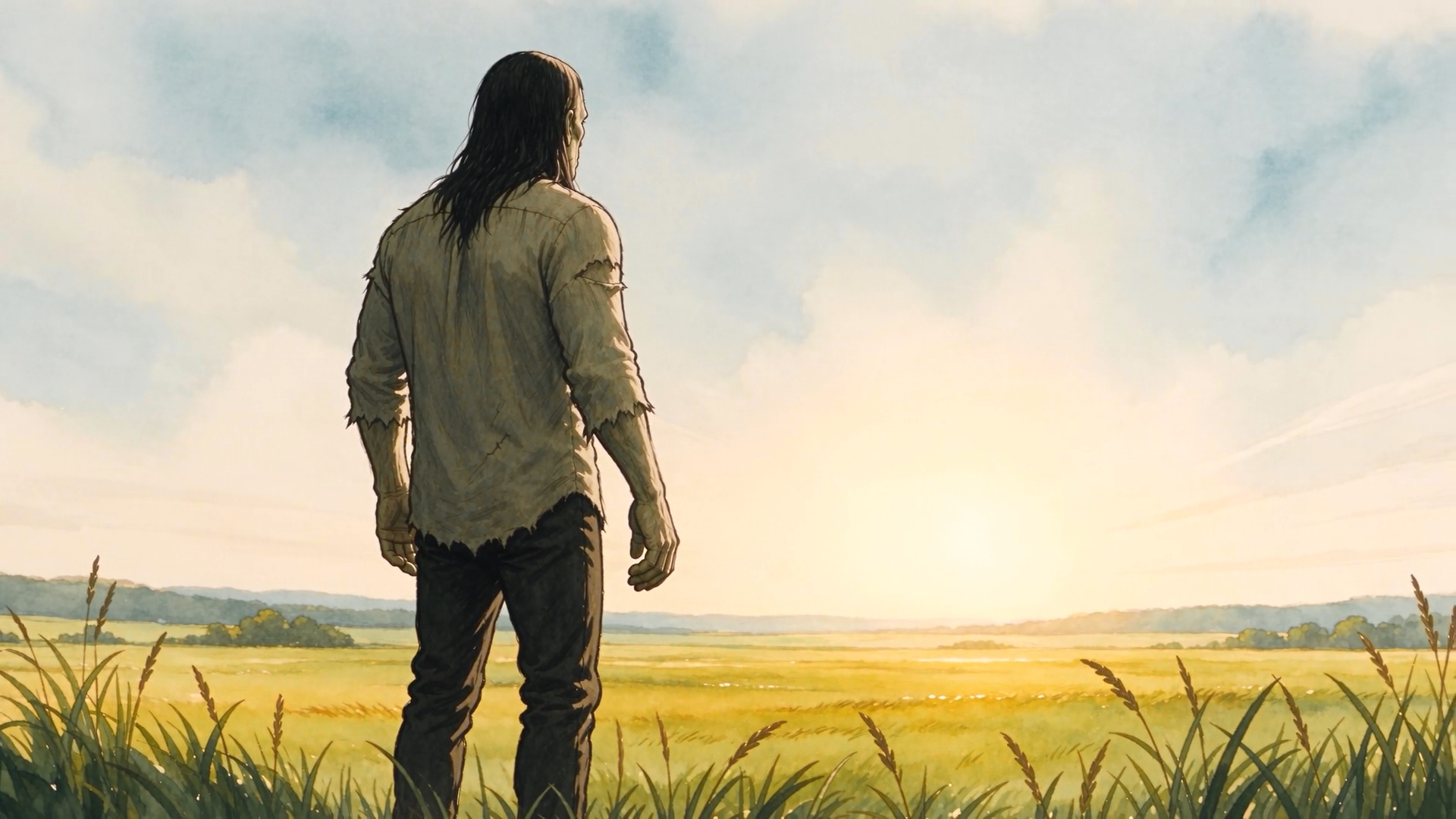
Why - is the world so empty of love?
For a brief moment, the world seems welcoming.
Nature does not judge him. The trees do not recoil at his appearance. The sunlight falls upon him as it would upon any other living thing.
Yet the people he encounters see something very different.
To them, he is a monster.
The cruelty of rejection
The Creature's appearance inspires fear. His attempts to approach others are met with hostility, and even those who might have offered kindness turn against him.
In one of the song's central scenes, a group of frightened farmers confront him. Their fear quickly becomes aggression, and stones are thrown.
Confused and terrified, the Creature raises his arm to protect himself.
He has done nothing to deserve their hatred. He simply exists.
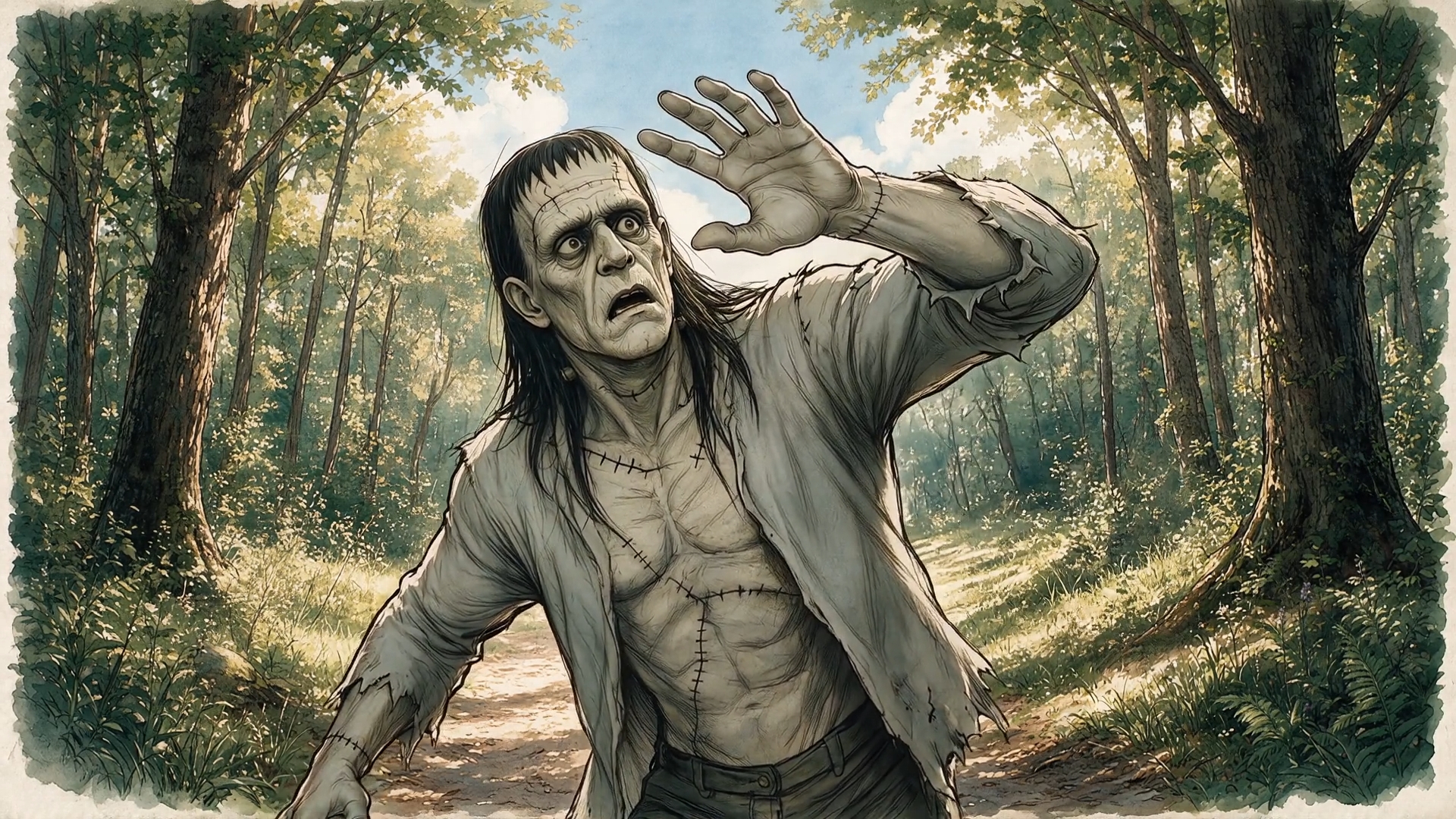
"Why - Do men fear what they cannot understand?"
It is a pivotal moment in his understanding of humanity.
The same world that offers such extraordinary beauty can also inflict terrible cruelty.
And the Creature is left with a question that no one seems willing to answer.
Why?
A question for his creator
At the heart of the song lies the Creature's relationship with Victor Frankenstein.
Victor brought him into existence, yet recoiled from what he had created. The one person who might have offered guidance, understanding and love abandoned him.
The Creature does not understand why.
He was not born with hatred in his heart. He was born with a desire to live, to learn and to be accepted.
As his experiences accumulate, his innocence begins to give way to loneliness, fear and despair.
The song is not simply an accusation against Victor. It is a plea for understanding.
Why was he created?
Why was he abandoned?
Why must he suffer for something over which he had no control?
And perhaps most importantly, why can the natural world accept him when humanity cannot?
Bringing the story to life
Why is the fourth song in our twelve-part musical interpretation of Mary Shelley's Frankenstein.
Like the previous chapters, it combines original music, storytelling and animated illustrations to explore the characters and emotions behind this enduring tragedy.
For this chapter, particular attention has been given to the contrast between the beauty of the natural environment and the emotional violence of the Creature's encounters with humanity.
The visual style continues to draw upon traditional watercolour painting and pencil illustration, creating a world that is both beautiful and unsettling.
Through music and imagery, we hope to encourage audiences to look beyond the Creature's appearance and recognise the frightened, lonely individual beneath it.
Because perhaps the greatest tragedy of Frankenstein's Creature is not that he was created differently from everyone else.
It is that nobody was willing to see him as one of their own.
Frankenstein: A Musical Tragedy — Song IV: Why
An original production by Water Lane Studios.
Original stories, exploring human nature.
In creating the video, I kept returning to the idea of restraint. Letting moments breathe. Letting the camera linger just long enough to suggest awareness without forcing it. The aim wasn’t to explain the Creature, but to sit beside him for a moment as he experiences the world.
This project continues to be a gradual process - building piece by piece, exploring both the tools and the story as they evolve together. Each part adds a small layer, and over time, something larger begins to take shape.
For now, it is enough to look… and to reach for light.
And perhaps, in that first fragile moment of awareness, there is something faintly familiar - not just of his world, but of our own.
David